
What is Continual Improvement?
It’s all about organisational resilience
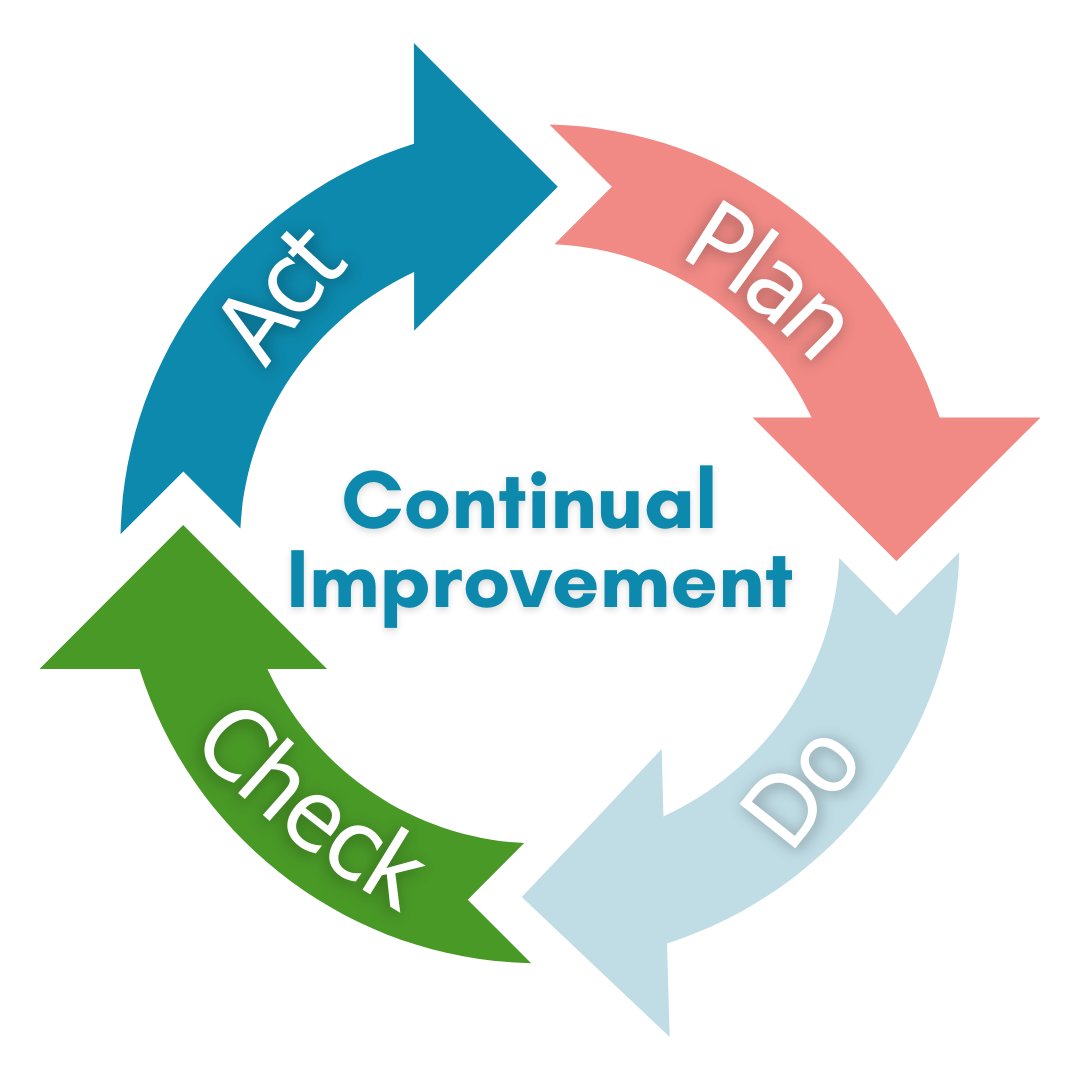
Continual improvement is a core principle of many ISO management system standards. It’s all about identifying opportunities to do things better; which usually includes cyclical activities to enhance an organisation’s products, services, systems, or processes, usually by applying the cycle of Plan > Do > Check > Act.
This concept aligns closely with the Japanese philosophy of Kaizen — an approach that saw Japanese industry rapidly and consistently provide quality products. Kaizen principles focus on incremental improvements involving everyone from leadership to frontline workers. The aim? To create more value with less waste.
A culture of continual improvement includes pragmatic steps to consider strategy, mitigate risk, realise opportunities, and to establish and measure goals.
Why is Continual Improvement important?
Because the world doesn’t stand still; and if you’re not moving forward, you’re moving backward…
Whether it’s shifts in customer expectations, regulatory changes, global events, or new technologies, organisations that commit to continual improvement are better equipped to adapt, compete, and thrive on a global stage.
Where we come in
We support businesses across all sectors to embed this mindset, align with international best-practice standards, and turn compliance into real, measurable performance gains.
If you’re ready to make continual improvement more than just a buzzword, we’re here to help.
Not working with us yet?
Contact us to arrange a no-obligation chat. Whether it’s improving workplace culture with continual improvement, implementing a new ISO standard like ISO 9001 Quality Management, improve your health and safety management, measure your sustainability, or increase your cyber security; we can help.